Scent Notes 4 minute read
Amber is not one note.
It is a blend of warmth, resin, wood, sweetness, and smoke.
4 minute read · Published
Amber is an accord, not an ingredient
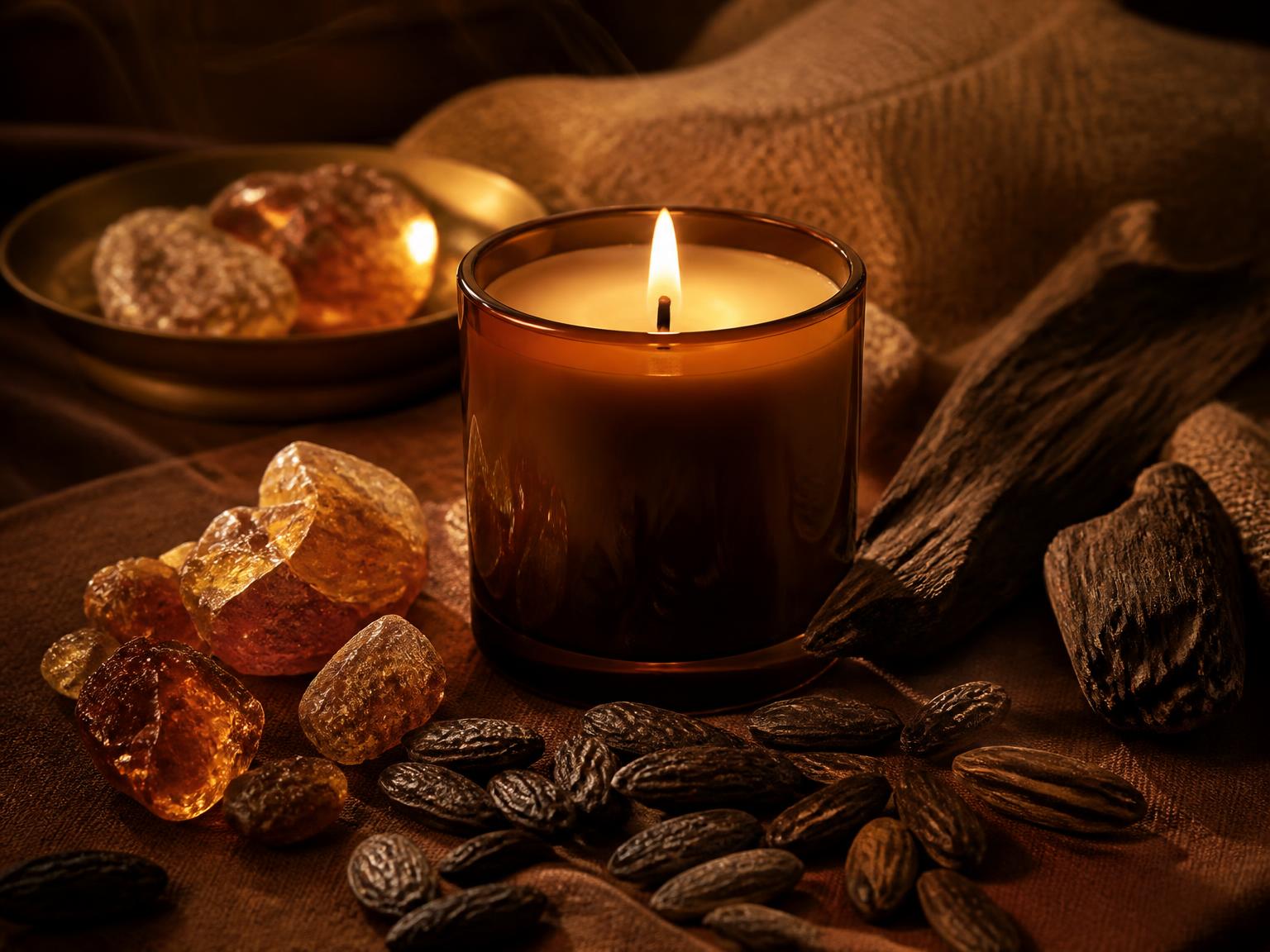
Fossilised amber — the golden stone — carries almost no scent. What perfumery calls amber is an accord: a blend built to suggest warmth, resin and skin. The classic formula pairs labdanum (a sticky resin from the rockrose shrub) with vanilla and benzoin, sometimes lifted with a touch of citrus.
So when a candle says amber, it is describing a feeling rather than a raw material.
How amber smells
- Warm and slightly sweet, but drier than vanilla on its own
- Resinous — think incense smoke that has cooled
- Powdery in the drydown, with a soft, skin-like closeness
- Long-lasting: amber materials are heavy and evaporate slowly
What amber is usually blended with
Cardamom and saffron make it feel festive and Indian. Tonka and coffee push it toward gourmand comfort. Sandalwood and cedar make it quieter and more meditative. Rose keeps it romantic and softens the resin.
Where amber works best at home
Amber flatters rooms that are already warm — living rooms with wood or wool, bedrooms, entryways in winter. It is generally too heavy for a small bathroom or a workspace where you want to stay alert, and it can compete with food, so keep it away from the dining table while you eat.
Who tends to love it
People who reach for oud, chai, leather, old books and incense. If bright citrus candles feel thin to you, amber is usually the correction.
How we use amber
In Vanilla Cashmere it is soft and wrapped in sweetness. In Amber & Cardamom it turns spiced and celebratory. In Mysore Sandalwood it recedes, letting creamy wood lead while amber holds the base steady through a full 40-hour burn.